Consistency Before Conclusions: A Cautious UK Approach to Measuring CBD
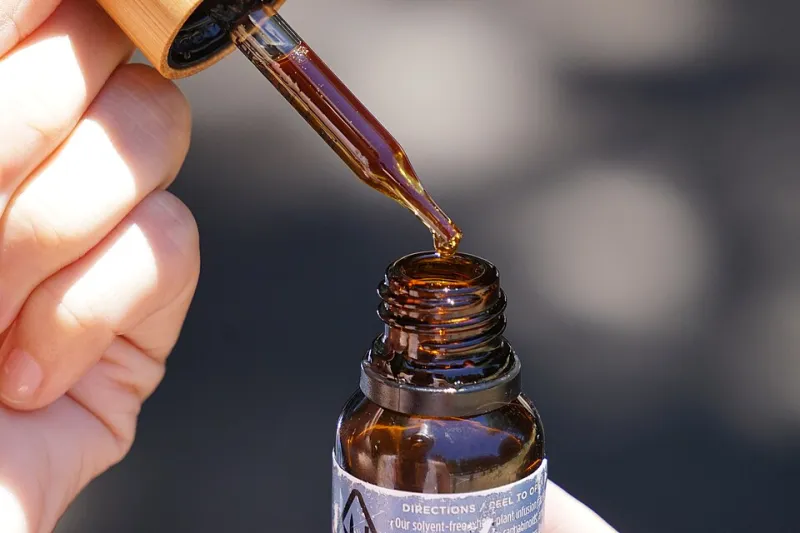
Photo: elsaolofsson, CC BY 2.0, via Wikimedia Commons
A CBD routine is easiest to assess when each serving is measured in the same way. Yet routines often drift: a few extra drops here, a spray counted by feel there, or a spoonful estimated because the label is not close at hand. For UK readers in 2026, the sensible approach is not to chase precision for its own sake. It is to reduce avoidable variation so that any personal observations are easier to interpret. This article is general information, not medical advice, and it is not a comparison of products.
Why measurement drift happens
CBD products are sold in several formats, and each format introduces its own small variables. A dropper bottle may release slightly different amounts depending on angle, temperature or how firmly the bulb is squeezed. A spray may need priming, or may deliver a consistent amount only when used upright. Capsules are fixed units, but they still depend on the label being read correctly. Kitchen measures are familiar, but household teaspoons and tablespoons are not standardised instruments.
None of this means a routine cannot be simple. It means the measuring method should be chosen deliberately rather than improvised. In the UK, CBD is generally sold as a food supplement rather than a medicine, and labels carry serving guidance for a reason. Following that guidance is the starting point. Guessing is not.
Start with the label, not the kitchen drawer
Before measuring anything, read the label properly. Look for the serving size, the concentration, the number of drops or sprays per serving, and any storage instructions. If the label says four drops, use four drops rather than an approximate half-dropper. If it expresses strength as CBD per ml and also as CBD per serving, note both figures so there is no confusion later.
Do not exceed the label instructions. If the label is unclear, contact the retailer or manufacturer before using the product. Avoid converting one product’s serving into another product’s drops by eye, because droppers and concentrations can differ. A cautious reader should also check that the product is intended for adults and is not recommended for anyone under 18, or for people who are pregnant or breastfeeding. If you take medication or have a health condition, speak to a pharmacist or doctor before starting.
Drops and sprays: count the unit, not the moment
With droppers, the unit is the drop. Count drops into the same clean vessel or use the method described on the label. Keep the bottle at a similar angle each time and avoid squeezing harder to speed things up. If a drop is missed or spilled, do not compensate by adding an extra serving. Wait for the next scheduled serving and return to the label guidance.
Sprays are similar, but the unit is the spray rather than the second. Count sprays aloud if that helps. If the product requires priming, follow the label and note when priming was done. Do not assume that two quick sprays equal one slow spray, or that a spray from a new bottle behaves exactly like one from a bottle that has been used for weeks. Consistency comes from using the same counted unit each time.
Capsules: the advantage of a fixed unit
Capsules remove much of the measuring variability found in liquids. That does not make label reading optional. Check how many capsules constitute a serving, store them as directed, and do not split or open capsules unless the label specifically says this is appropriate. Keep the original container so that batch details and instructions remain available.
For some readers, capsules may feel easier to integrate into a routine because there is no dropper to count. The trade-off is that capsules are less flexible if the label serving is fixed. Either way, the principle is the same: use the unit the label describes, not an estimate based on what seems convenient.
Kitchen measures: useful, but limited
Teaspoons, tablespoons and kitchen scales can be useful for cooking, but they are not automatically suitable for CBD liquids. Household spoons vary in volume, and oils can cling to the spoon. A kitchen scale may help only if the label gives guidance by weight, which many products do not. Markings on a supplied dropper may be helpful, but they should be checked against the label rather than assumed.
If a product comes with a measuring device, use it as intended. If it does not, avoid inventing a conversion. “Half a teaspoon” is not a universal CBD serving, and a “splash” is not a measurement. A cautious routine is better served by a counted drop, a counted spray or a fixed capsule than by a kitchen estimate.
A simple note-keeping habit
Brief notes can make a routine easier to review without turning it into a project. Record the date, product name, batch number if available, the serving used, the method of measurement and the time of day. Add a short note about anything that seems relevant, such as sleep, stress or a missed serving. Keep the notes factual rather than interpretive.
This is not about proving anything. It is about creating a clearer record if you later want to discuss your routine with a healthcare professional or simply decide whether the routine is practical. Consistency in measurement gives those notes a firmer foundation.
What consistency can and cannot tell you
Consistent measuring cannot establish that a product is effective, and it cannot guarantee safety. It can, however, reduce one source of confusion. If each serving is measured the same way, any changes in your notes are less likely to be caused by an accidental extra drop or an inconsistent spray. If you experience any adverse effect, stop using the product and seek appropriate advice.
A calm standard for 2026
Choose one measuring method, follow the label, store the product correctly and keep simple notes. Avoid comparing products by feel, and avoid adjusting serving size based on online anecdotes. For UK readers, buying from a retailer that provides clear labelling and batch information is part of the same cautious approach. Measurement is not the most exciting part of a CBD routine, but it is one of the easiest places to introduce a little order. Consistency before conclusions is a reasonable standard for the year ahead.